

Accoya is not a different species of timber. It is a fundamentally improved one.
Acetylation modifies the timber at a cellular level, changing how it interacts with moisture. The result is wood with Class 1 durability, a 50-year above-ground warranty, and dimensional stability that outperforms most hardwoods and virtually every conventional softwood.
Masswood is an approved Accoya manufacturer supplying architects, builders and specifiers across Australia. We manufacture Accoya to scope so each profile suits its application. We machine to project requirements, support specification and detailing decisions, and deliver timber to site ready to perform from day one.
Accoya delivers consistent, predictable performance in demanding environments.
Specifying Accoya is one decision. Delivering it correctly on site is another.
Masswood delivers Accoya as timber that performs as intended on site, manufactured to scope and detailed for Australian conditions. As an approved Accoya manufacturer, we don’t simply supply timber; we prepare it for the specific demands of your project, your site and your climate.
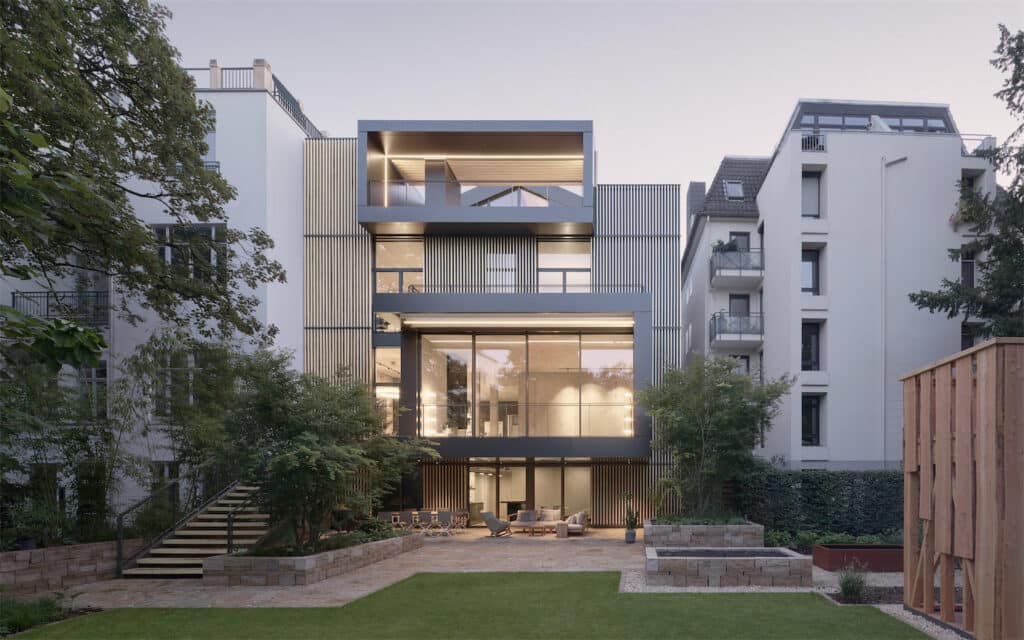
Accoya specified through Masswood arrives with the detailing support, profile options and technical guidance needed to move confidently from documentation to installation. We understand how the material behaves across Australian exposure conditions and can support specification decisions from early design through to construction documentation.
Custom profiling, consistent tolerances and application-specific guidance reduce the risk of detailing errors that only become visible once the build is underway.

Timber supplied by Masswood is machined to project scope before it arrives on site. Profiles are precise, tolerances are consistent, and the material is ready for installation without on-site modification.
We provide guidance on fixing, ventilation, and drainage detailing, and installation support that reduces site risk and improves build efficiency. Fewer surprises during installation means fewer problems over the life of the structure.
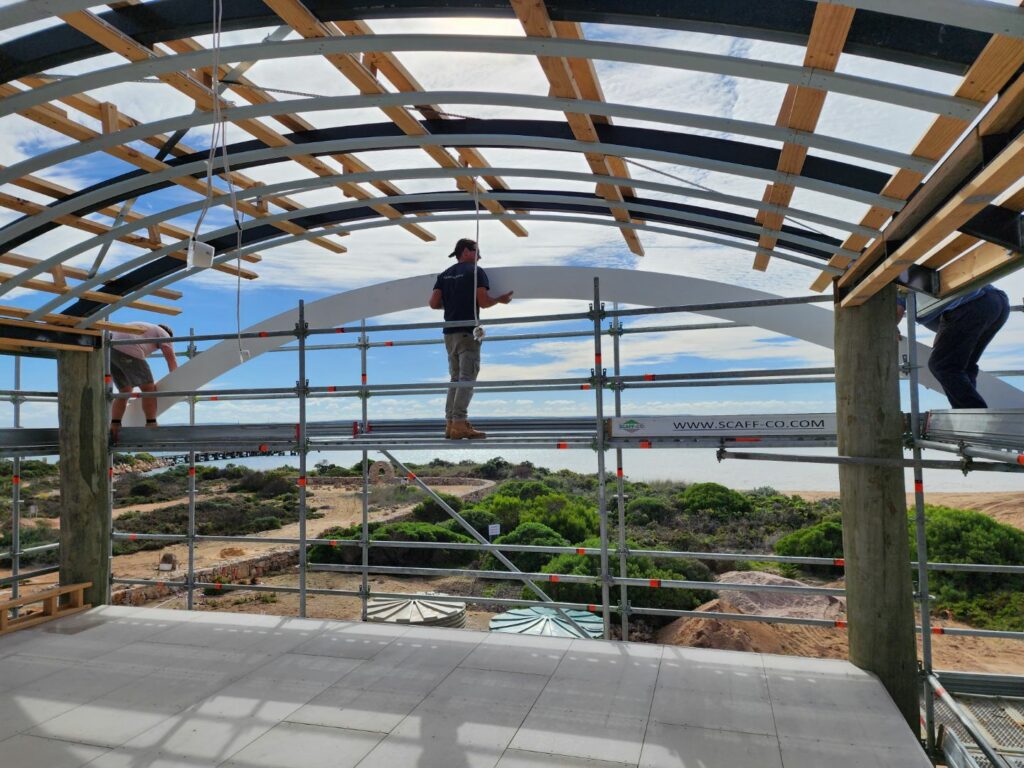
Accoya timber performs across a wide range of architectural and structural applications in Australia, from residential builds to large-scale commercial projects, where stability and longevity are critical. Masswood supports each through dedicated product pathways, with machining, profiling and technical guidance tailored to the demands of each application type.
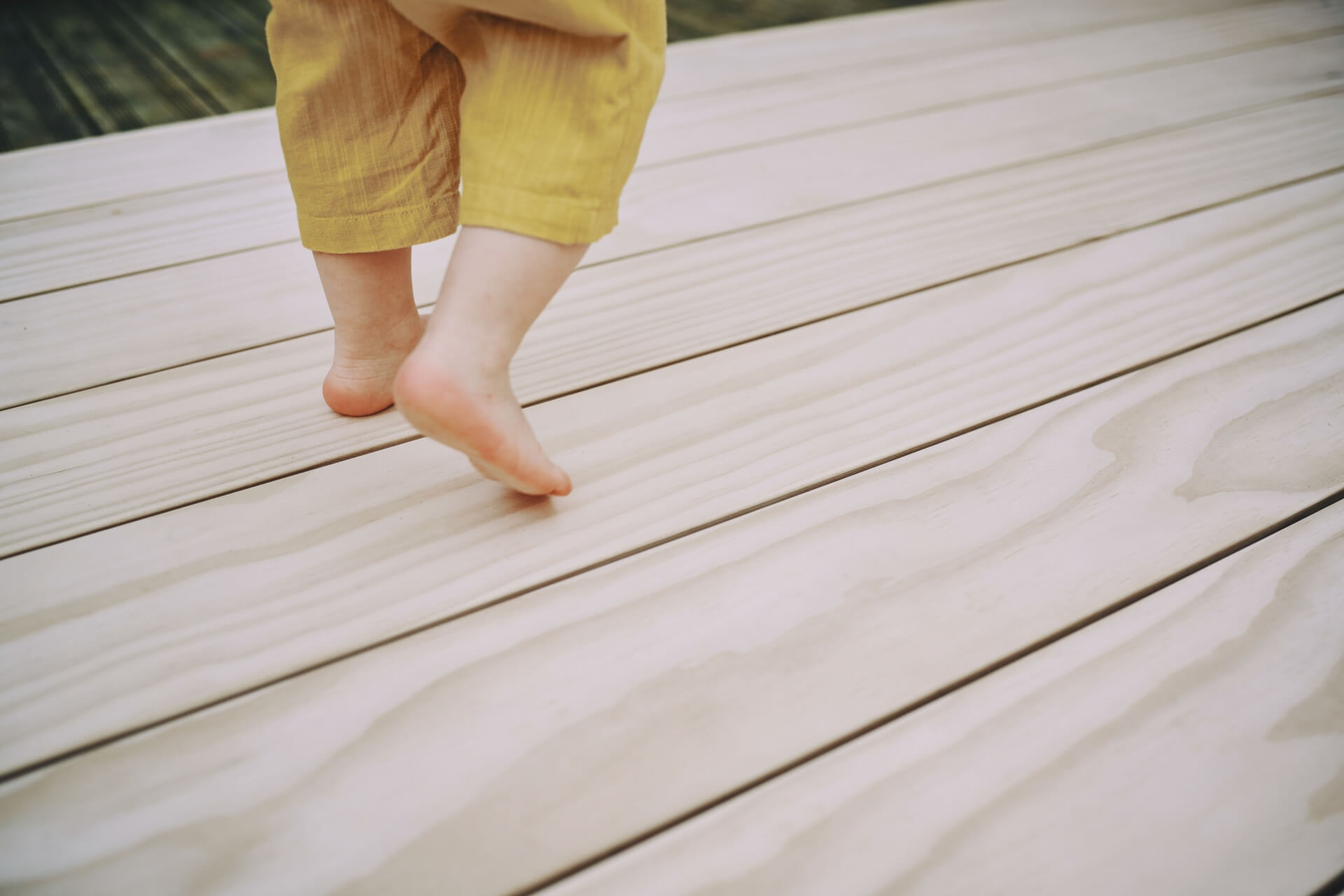
Accoya decking stays flat, resists splitting and warping, and remains comfortable underfoot through years of exposure. Its dimensional stability makes it suitable for residential decks, pool surrounds, rooftop terraces, waterfront boardwalks and high-traffic commercial outdoor spaces.
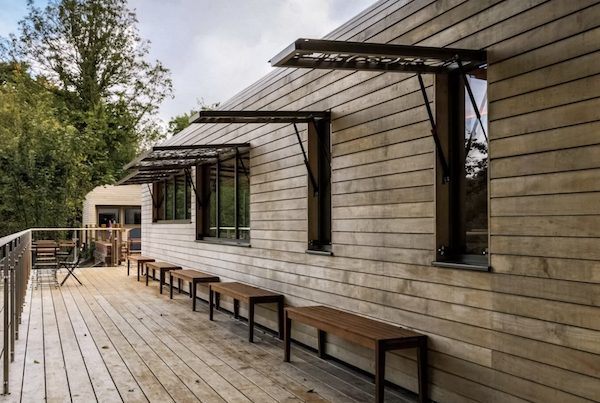
Accoya cladding holds its lines, retains its finish and performs reliably across a range of façade orientations and exposure levels. Wide boards, clean profiles and reduced coating stress make it a strong choice for design-led residential and commercial projects.

Accoya battens maintain consistent spacing, clean shadow lines and minimal distortion over time. They are suited to architectural facades requiring precise repetition, solar shading elements and screening applications where long-term dimensional accuracy matters.

Masswood manufactures Accoya glulam using both primary Accoya stock and optimised offcut material from its own production. The result is a structural and architectural timber solution that carries Accoya's full sustainability credentials alongside genuine engineered timber capability. It reflects a depth of manufacturing capability that supports more ambitious structural and architectural outcomes while fully leveraging the material rather than discarding it.
Timber selection is often framed as a question of hardness. For external applications in Australian conditions, the more useful question is how the material behaves across its full service life.
Hardwoods are denser and offer greater initial resistance to surface dents and scratches. In external environments, however, exposure to moisture and drying cycles causes movement. Checking, splitting, and swelling are common outcomes, particularly in timbers used for decking and cladding. Tannin leaching can also be a problem with many hardwoods. Maintenance requirements tend to increase over time as the timber responds to seasonal conditions.
Accoya starts as a low durability softwood, but the acetylation process fundamentally changes its performance profile. Surface hardness remains lower than that of many hardwoods, but dimensional stability is significantly improved. Boards move less through wet and dry cycles, resist biological decay without toxic treatments, and maintain their profile and finish over a longer service life.
For most external applications, long-term stability and predictable performance matter more than initial surface hardness. Accoya delivers a more consistent, lower-maintenance outcome over time, particularly in coastal, high-humidity, sun-exposed conditions common across much of Australia.
Accoya’s performance is supported by independent testing and long-term real-world applications. For architects and specifiers working through the details of a project, the following considerations are relevant across most Accoya applications.
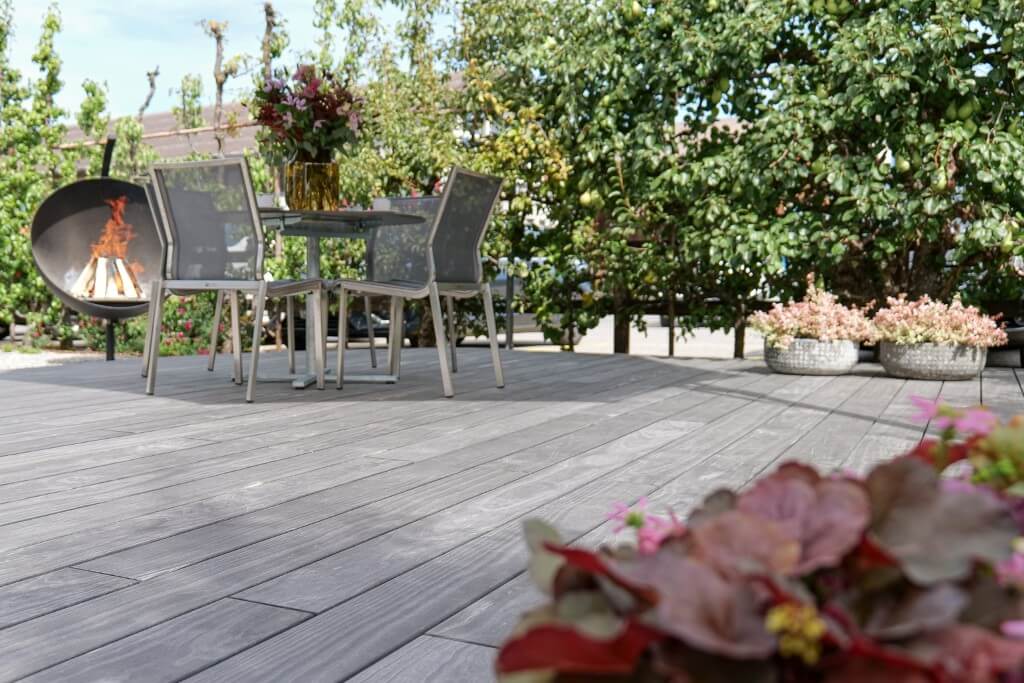
Accoya moves far less than most external timbers through wet and dry cycles. Radial movement averages 0.8% and tangential movement averages 1.6% from fully wet to oven dry — significantly lower than Douglas fir at 4.8% radial and 7.6% tangential, or Ipe at 6.6% radial and 8.0% tangential. Board spacing should still account for expected movement, but allowances are considerably smaller than those required for conventional timber species.
Good ventilation beneath decking and behind cladding systems reduces moisture accumulation and supports long-term performance. Accoya’s resistance to decay provides a significant margin over untreated timber, but proper detailing remains important.
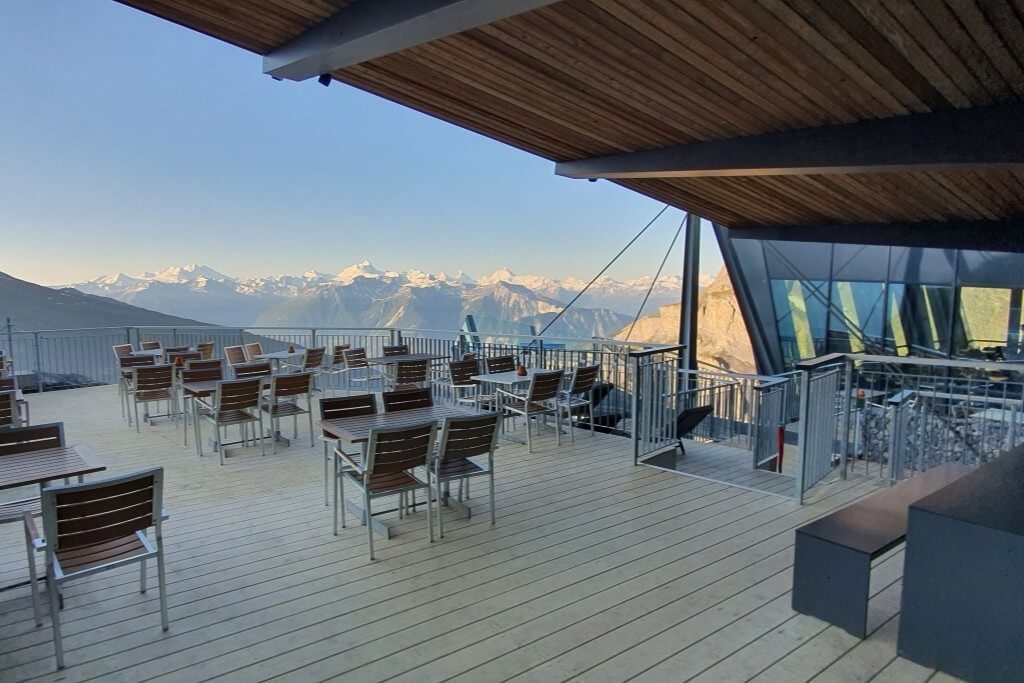
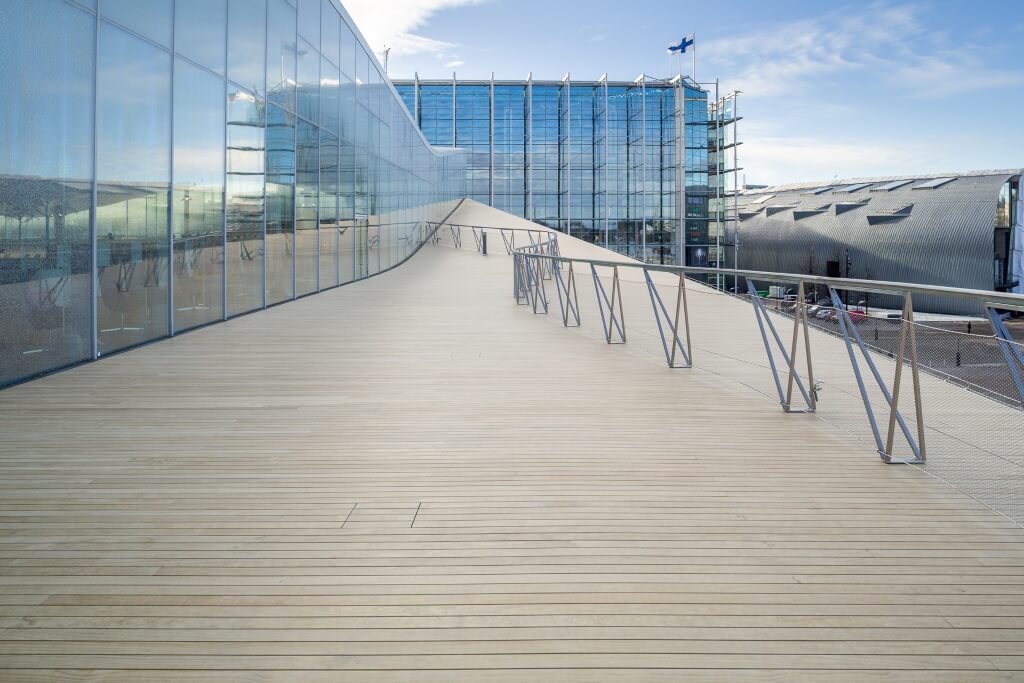
Accoya contains a small amount of residual acetic acid, comparable to that of other durable species such as oak and western red cedar. Stainless steel fixings are strongly recommended for all external applications. In coastal environments, A4 grade stainless steel should be specified. Galvanised and base metal fixings are not suitable for direct contact with Accoya in any circumstances as well as wet conditions.
Where Accoya interfaces with dissimilar metals or treated subframes, physical separation is recommended to reduce the risk of corrosion and staining. In practice, this is achieved using plastic packers or shims, or isolation layers such as neoprene or EVA tape between the timber and metal components. This prevents direct contact and helps maintain long-term performance in exposed conditions.
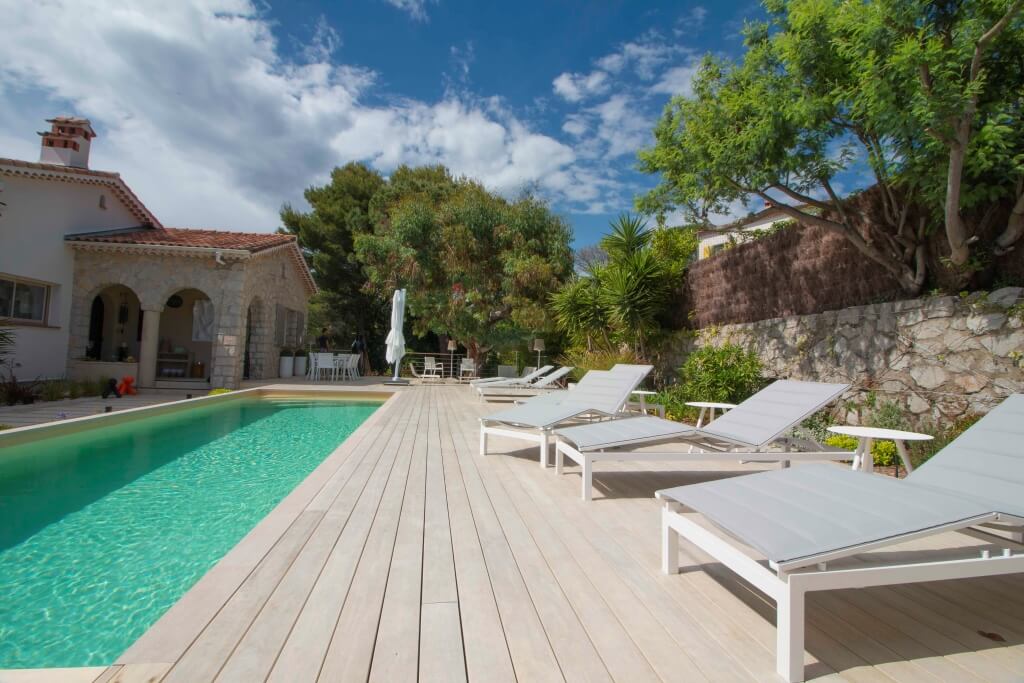
Fire classification requirements vary by project type, location and building code. In Australia, bush fire attack level zoning is a relevant consideration under AS 3959. Accoya has an average density of 515 kg per cubic metre, which places it outside the bushfire-resistant timber categories listed in AS 3959 Appendix E. A project-specific fire performance review should be undertaken by the relevant building design team. Masswood can provide technical documentation to support this process.Good ventilation beneath decking and behind cladding systems reduces moisture accumulation and supports long-term performance. Accoya’s resistance to decay provides a significant margin over untreated timber, but proper detailing remains important.
Australia’s built environment places specific demands on external timber. UV intensity, coastal salt exposure, high humidity in tropical regions and significant temperature variation across climates all affect how timber performs over time.
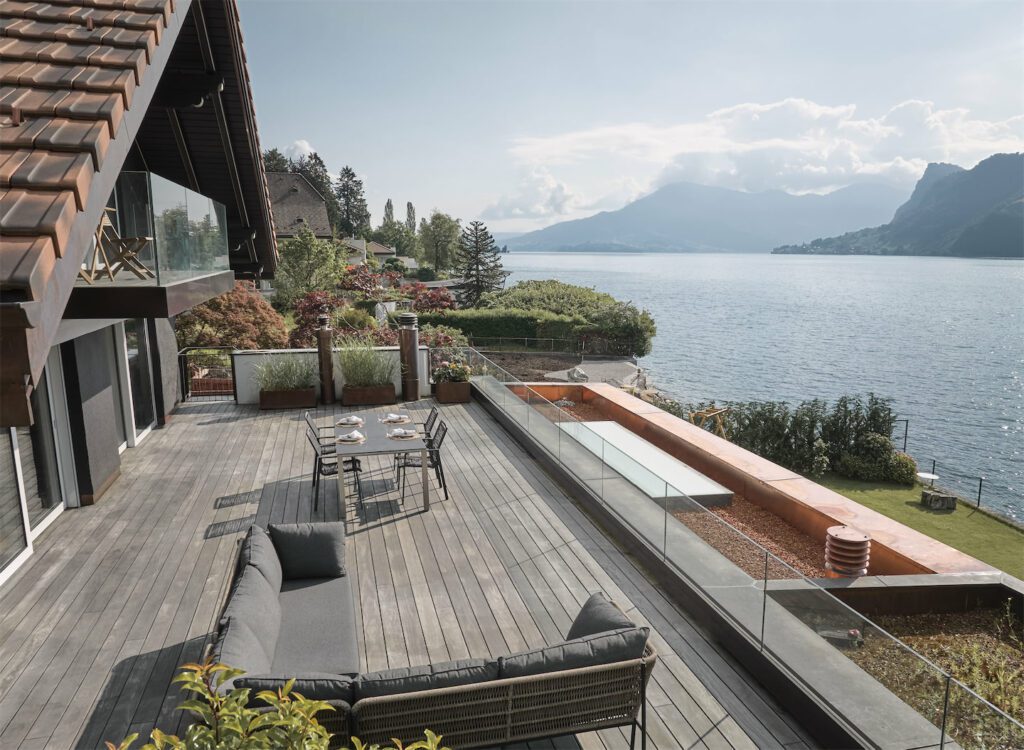
Accoya performs well in coastal applications when correctly specified and installed. The key variables are fixing selection and detailing. A4 grade stainless steel fixings are required in coastal zones to prevent corrosion from salt air and moisture. Pressure-treated timber used as a subframe can leach copper into Accoya, causing green surface staining. Isolation strips or Accoya subframe material should be used where appropriate. Where Accoya interfaces with metal components in coastal conditions, physical separation using plastic packers or shims, or isolation layers such as neoprene or EVA tape, is recommended to prevent direct contact and reduce corrosion risk over time.
Uncoated Accoya weathers to a silver-grey patina over time, as UV degrades surface lignin. This is a surface process only and does not affect the structural integrity or durability of the timber. Where a consistent colour is required, a pigmented coating system with an appropriate maintenance cycle will protect the surface and extend the coating’s service life. Darker pigments generally offer longer maintenance intervals than lighter ones.
Accoya’s equilibrium moisture content under typical conditions ranges from 3% to 5%, significantly lower than that of unmodified timber. This reduced moisture uptake is what drives its dimensional stability. In high-humidity environments, the material still performs reliably. The modification limits the amount of moisture the timber can absorb, reducing the movement that causes problems in conventional species.
Adequate ventilation behind cladding systems and beneath decking reduces moisture accumulation and the risk of surface mould growth. Accoya’s decay resistance provides a strong performance margin, but good design practice around drainage and airflow remains important regardless of the timber specified.

Masswood is proud to be an approved manufacturer of Glulam made of Accoya wood and we are certified by Accsys to manufacture with Accoya wood and provide Accoya solutions.
After decades of research and development, a revolutionary scientific process called acetylation gives Accoya radiata pine unmatched advantages and benefits that exceed hardwoods, and other materials such as PVC and aluminium.
The Masswood team go above and beyond to deliver exceptional Accoya solutions. We choose to use Accoya because it sets the new standard for wood performance in every way.
Accoya carries some of the strongest environmental credentials of any timber product available.
The modification process uses sustainably sourced timber and produces no toxic byproducts. Acetic anhydride is the primary input, and acetic acid (a naturally occurring substance) is the primary byproduct, which is recovered and reused within the process. The timber itself is non-toxic, fully recyclable, and FSC certified at source. Accoya was one of the first building products to achieve Cradle to Cradle Gold certification.
Its long service life is perhaps its most significant environmental credential. A material that lasts 50 years above ground requires less frequent replacement, reducing the building’s cumulative resource demand over its lifetime.
Masswood extends Accoya’s sustainability story through its own manufacturing approach. Accoya is processed locally, reducing transport and handling impacts. Offcuts from Masswood’s production are used in glulam manufacture rather than discarded, extracting the full value from the material. Masswood holds PEFC Chain of Custody certification, providing independent verification of responsible timber sourcing through the supply chain.
Together, Accoya and Masswood support building projects that prioritise longevity, responsible sourcing and efficient use of materials.
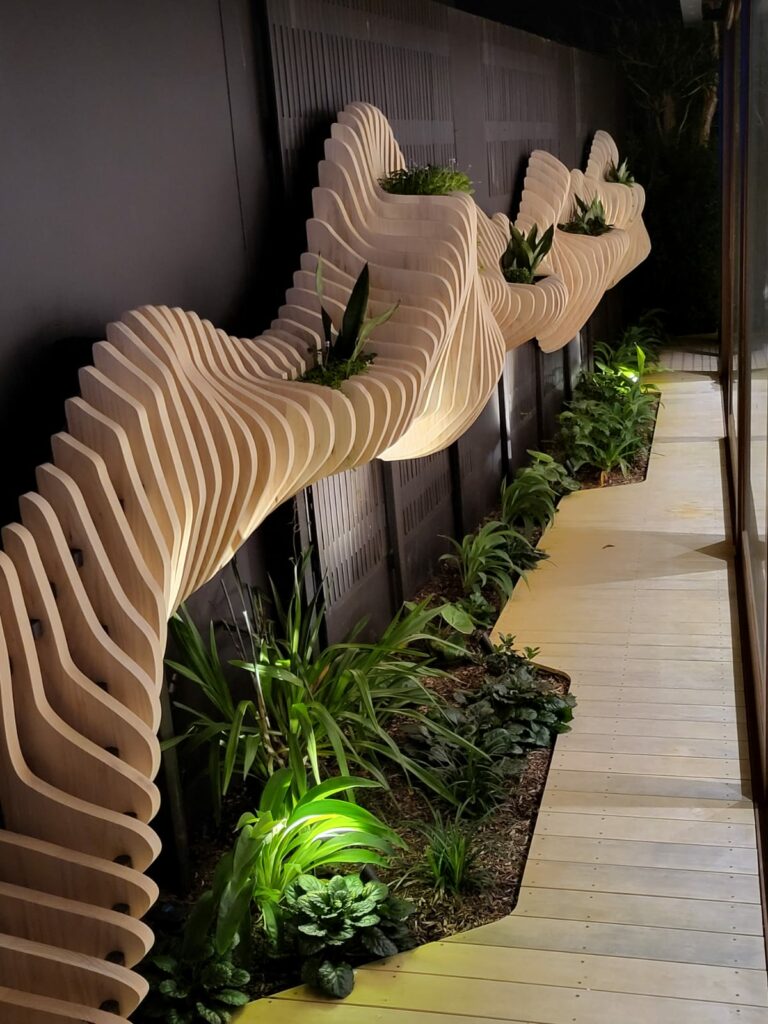
Masswood supports project teams from early design through to construction, providing the technical support needed to specify and build with Accoya correctly and efficiently.
We can assist with profile selection and custom machining to project scope, exposure and climate guidance for Australian conditions, detailing for ventilation, drainage and long-term performance, fixing method and spacing recommendations, and technical documentation to support specification and compliance review.
For architects, this means moving from design intent to buildable documentation with fewer unknowns. For builders, it means timber arriving on site prepared, with the guidance needed to install it correctly the first time.
Contact our team to discuss your project requirements.
Read more about the incredible properties of Accoya.
Download or link through to these resources.
Get in touch, we'd like to help
Accoya is a modified timber produced through an acetylation process that permanently alters the wood’s cellular structure. The modification reduces moisture uptake, dramatically improving dimensional stability, durability and resistance to decay. It is not a treated timber in the conventional sense; the change is structural and permanent.
Acetylation replaces the hydroxyl groups in the timber’s cell walls (the parts that attract and hold moisture) with acetyl groups that repel it. The process uses acetic anhydride, produces no toxic byproducts, and uniformly modifies the timber throughout its full cross-section, not just at the surface.
Accoya achieves Class 1 durability under both European standards and AS5604, the relevant Australian standard. Class 1 is the highest durability rating available, placing Accoya alongside the most durable naturally occurring timber species.
Accoya carries a 50-year warranty for above-ground applications and a 25-year warranty for in-ground contact and freshwater immersion. The warranty is issued by Accsys Technologies and is subject to correct specification, installation and maintenance in accordance with Accsys guidelines.
Accoya carries a 50-year warranty for above-ground applications and a 25-year warranty for in-ground contact and freshwater immersion. The warranty is issued by Accsys Technologies and is subject to correct specification, installation and maintenance in accordance with Accsys guidelines.
Hardwoods are generally denser and offer greater initial surface hardness. Accoya offers significantly better dimensional stability, moving less through wet and dry cycles and requiring less maintenance over time. For external applications where long-term performance matters more than initial hardness, Accoya is a strong alternative to many hardwood species.
Accoya can be left uncoated for decking, cladding and batten applications. It will weather naturally to a silver-grey patina over time. The weathering process affects the surface only and does not compromise the timber’s structural integrity or durability.
Masswood highly recommends that Accoya receive at least one coat of primer to help protect against surface mould and fungal growth, which may occur in some areas, particularly in areas where there is limited sun exposure. To understand what happens to Accoya over time, go here: https://www.youtube.com/watch?v=Huy8iAxRyc4
Yes. Accoya’s stable nature allows it to be stained and varnished in any colour. This ensures that your chosen finishes remain pristine for longer and enhances the overall aesthetic appeal of your projects. We also offer a grey product.
Stainless steel fixings are required for all external Accoya applications. A4-grade stainless steel should be specified for coastal or high-humidity environments. Galvanised and base-metal fixings are not suitable for direct contact with Accoya in wet conditions due to the timber’s natural acidity.
Accoya is sustainably sourced and boasts a lower carbon footprint when compared to materials like uPVC and aluminium. Remarkably, it also helps in CO₂ removal over its lifecycle and is non-toxic, earning the C2C Platinum Certification™ for Material Health.
Accoya is ideal for glulam (glued laminated timber) due to its pliability and resistance to thermal variance, cracks, and splinters; this makes it an excellent choice for both traditional and innovative curved wooden designs.
Accoya boasts superior dimensional stability, high durability against rot, and excellent insulation properties. It also enhances the lifespan of surface coatings due to its light, natural colour and ease of preparation.
No. Due to its stability and resistance to environmental factors, Accoya wood extends the maintenance intervals significantly, allowing coatings and finishes to look pristine for longer.
Accoya wood offers superior thermal insulation, 8% better than softwoods and 30% superior to hardwoods. It locks in warmth while remaining cool to the touch.
Yes, every batch of Accoya wood undergoes rigorous testing post-production to ensure its durability and performance are up to the highest standards, guaranteeing long-lasting quality.
Yes. Masswood machines and profiles Accoya to project scope, supporting both standard and custom applications across cladding, decking, battens and glulam. Profile selection guidance is available from our technical team.
Masswood provides technical guidance across the full project lifecycle, from early design and profile selection through to fixing details, installation guidance and compliance documentation. Our team works alongside architects, builders and specifiers to ensure Accoya is correctly specified and delivered ready to perform on site.
Contact us to discover the true potential of timber.
At Masswood, we’re passionate about using and delivering products that offer contemporary, state-of-the-art, and sustainable design solutions. Contact us to discover timber’s true potential.